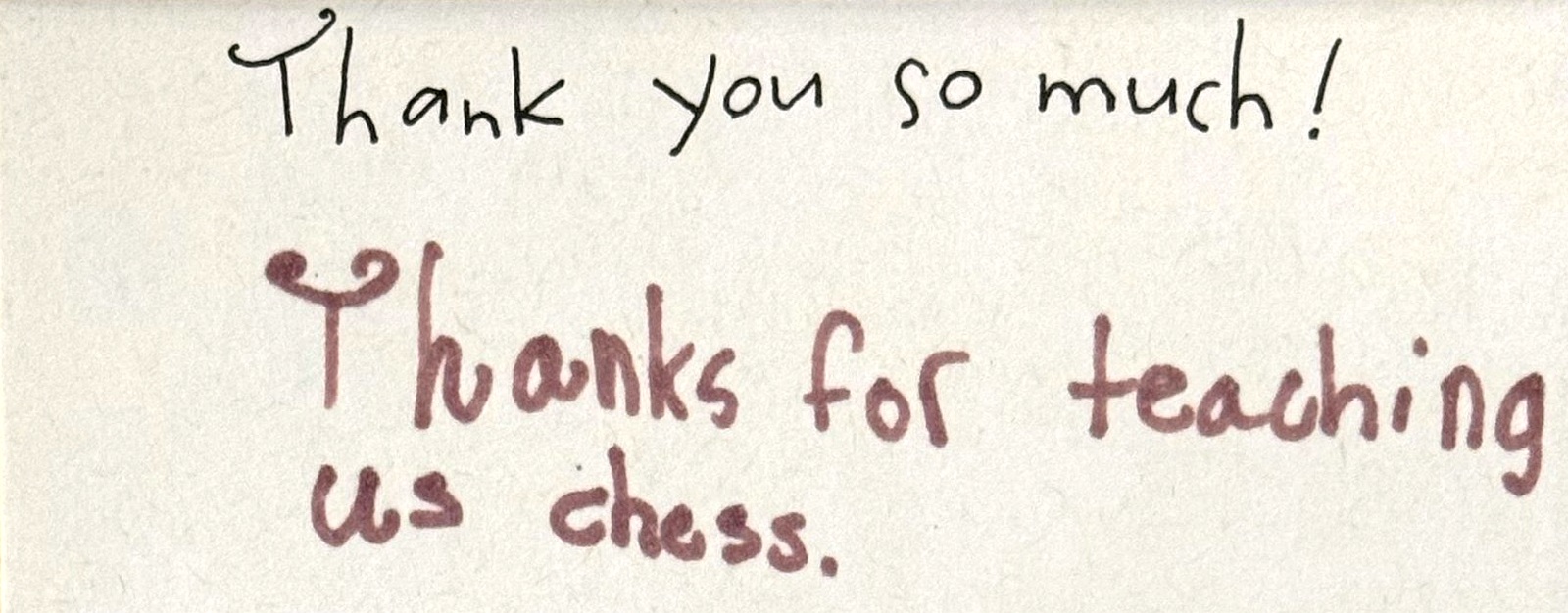
“I will never be the world champion,
but I can change the world of a child
through chess.”
Coach Vellotti
The Coach
He starts them
at three years old
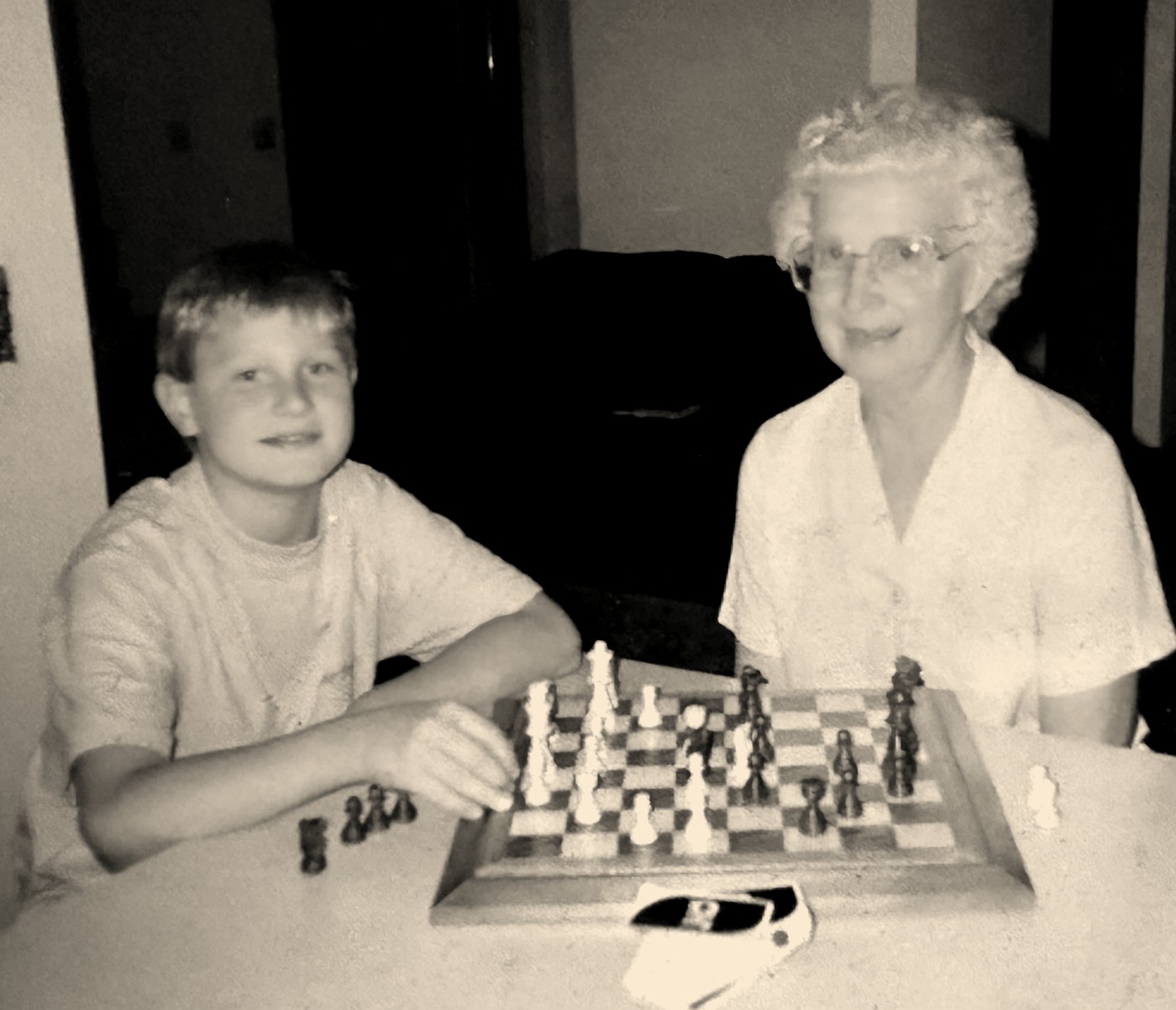
Chess came to him from his grandmother. Marcella Tomei taught him the moves when he was about eight — “what little I knew,” as she put it. “He seemed like he was really dedicated from day one.”
He was nine years old when he knew he wanted to teach.
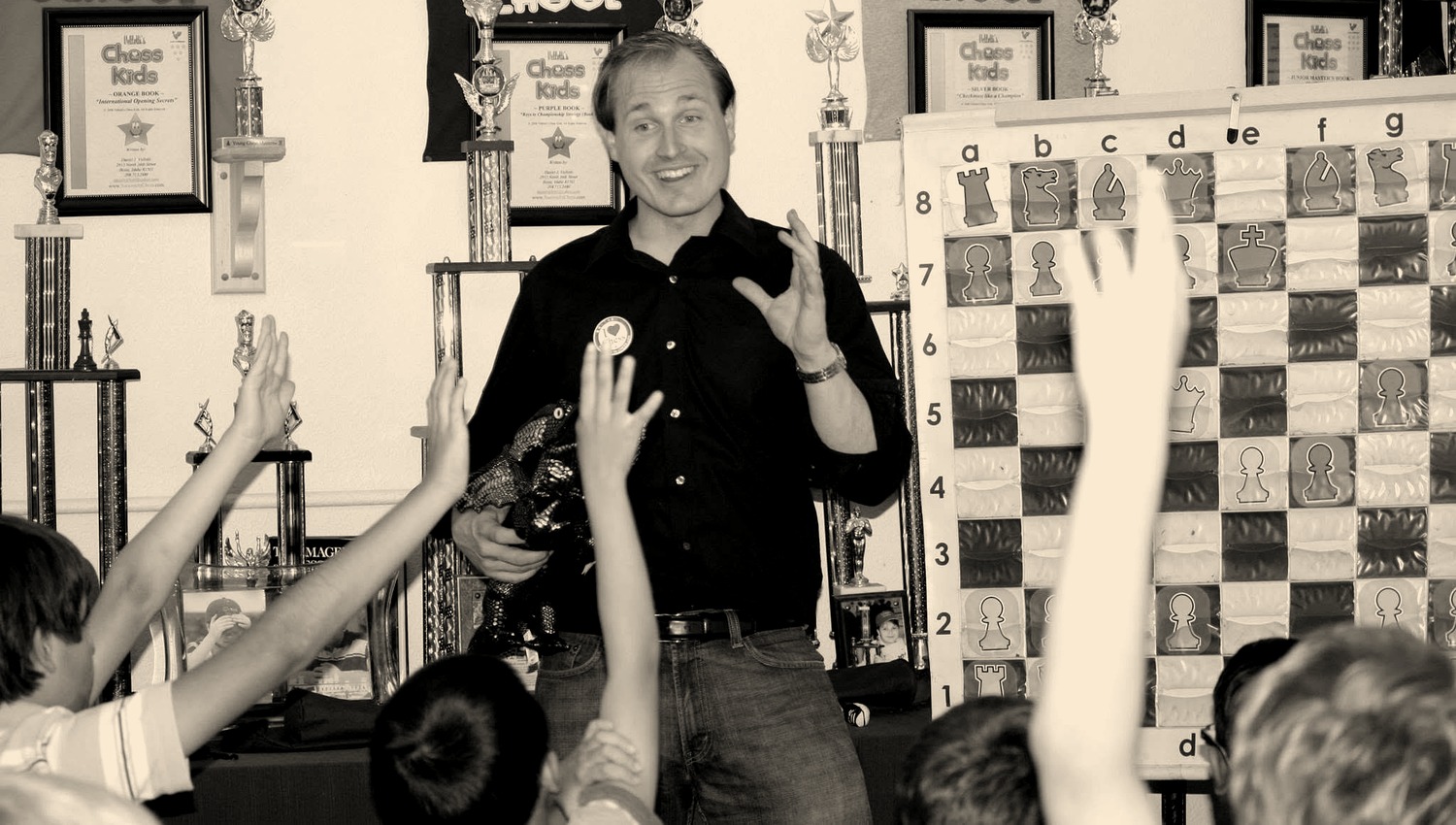
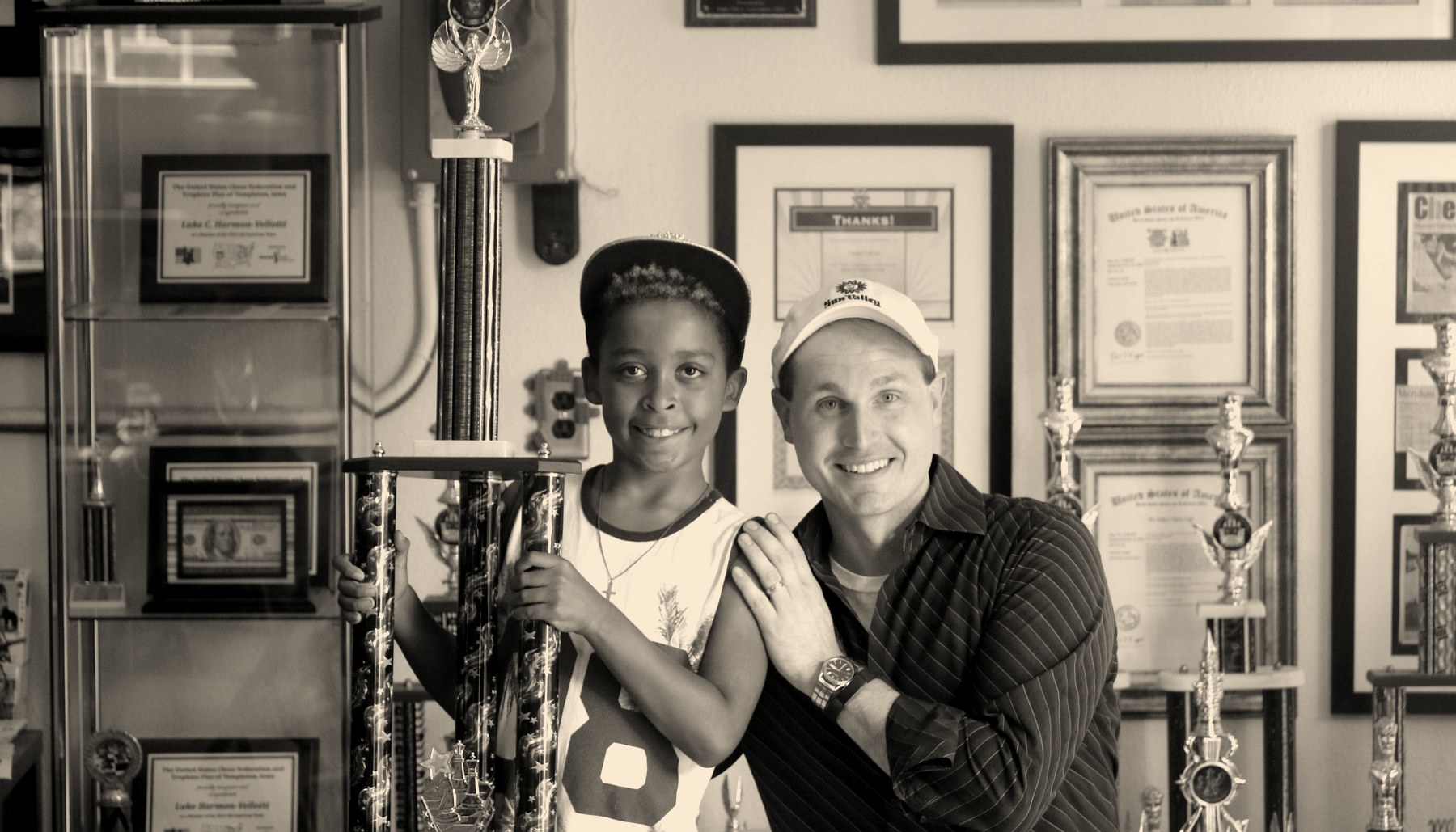
Daniel Vellotti has taught chess to children for twenty-two years: in private lessons, in summer camps, and in the classrooms of some of the most selective independent schools in the country.
Most of his students arrive having never touched a piece. Together they have won more than two hundred championship titles.
The school has grown almost entirely by word of mouth. Parents tell other parents.
Chess can be challenging. He’s turned chess mastery into an adventure, rather than a zero-sum game.
His trademarked answer: We Make Chess Fun!
The method
The Future Grandmaster Training System
Most coaches teach children the way they were taught themselves: by reviewing the games of past masters. It is how a strong adult player improves. For a seven-year-old, it is a lecture.
He built the alternative instead, starting in 2004 — years before teaching through play had a name. The ranks, the puzzles, the seven books, the trademarked programs: he made all of it himself, because none of it existed.
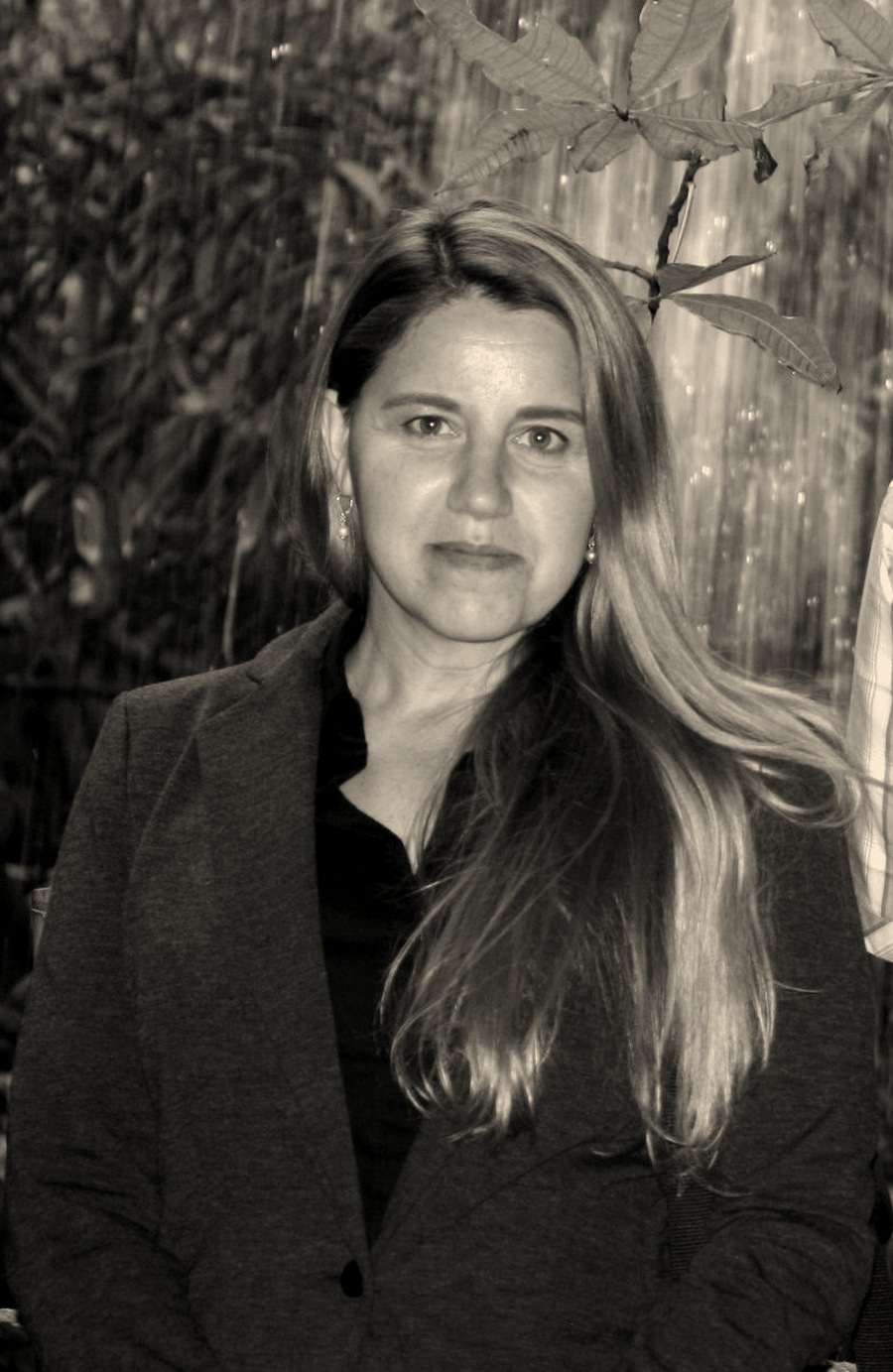
“Ava and her husband, Daniel, a former chess champion, run Vellotti’s Chess School in Boise, employing a number of games and other techniques to teach chess to children.”
Children advance through ranks, the way scouting does. Each rank is earned, and the next one is visible from where they stand.
The system began with nine ranks, and children graduated from it. Then some of them told him they did not want to leave. So he kept building.
Competition arrives on its own. A child working toward something wants to test it, and asks to play before anyone suggests it.
Chess does not sort children by age. After about six months, a child who is taught properly will beat most adults who play casually. Children find this very funny.
“I’ll never tell a student, ‘You’re wrong.’ Instead, I’ll say, ‘You’re so close; try again. You’re getting warmer.’”
A child who is enjoying it stays. A child who stays improves. The titles on this page came in that order.
What they can do
Chess magic
He calls three things chess magic, for what they do to a watching parent.
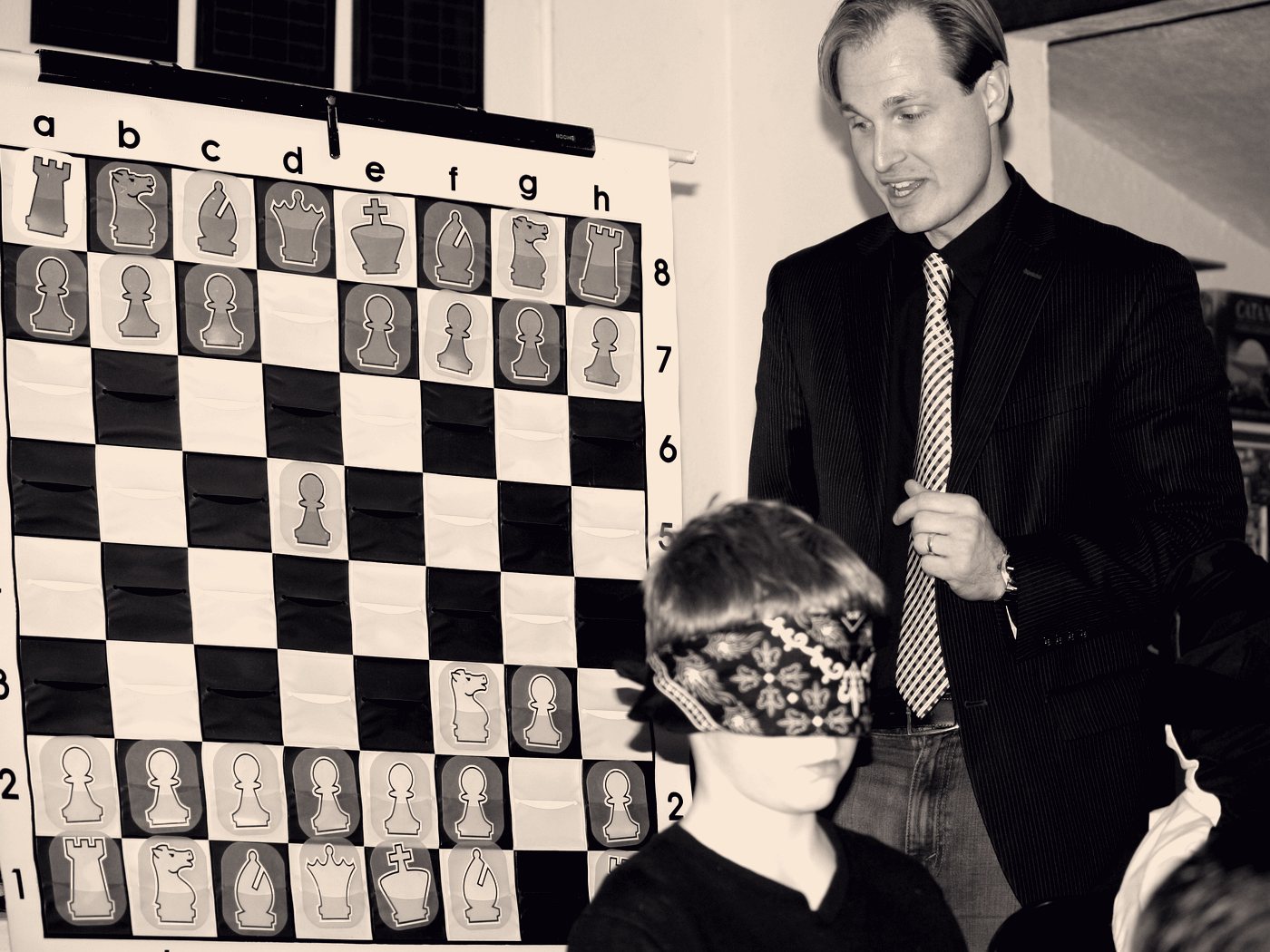
Children who play with their eyes covered.
Advanced students taking on several opponents at once — he has played fifty at the Idaho State Capitol himself.
And speed chess, where a child gets five minutes on the clock against his one.
Where he teaches
Over fifty schools
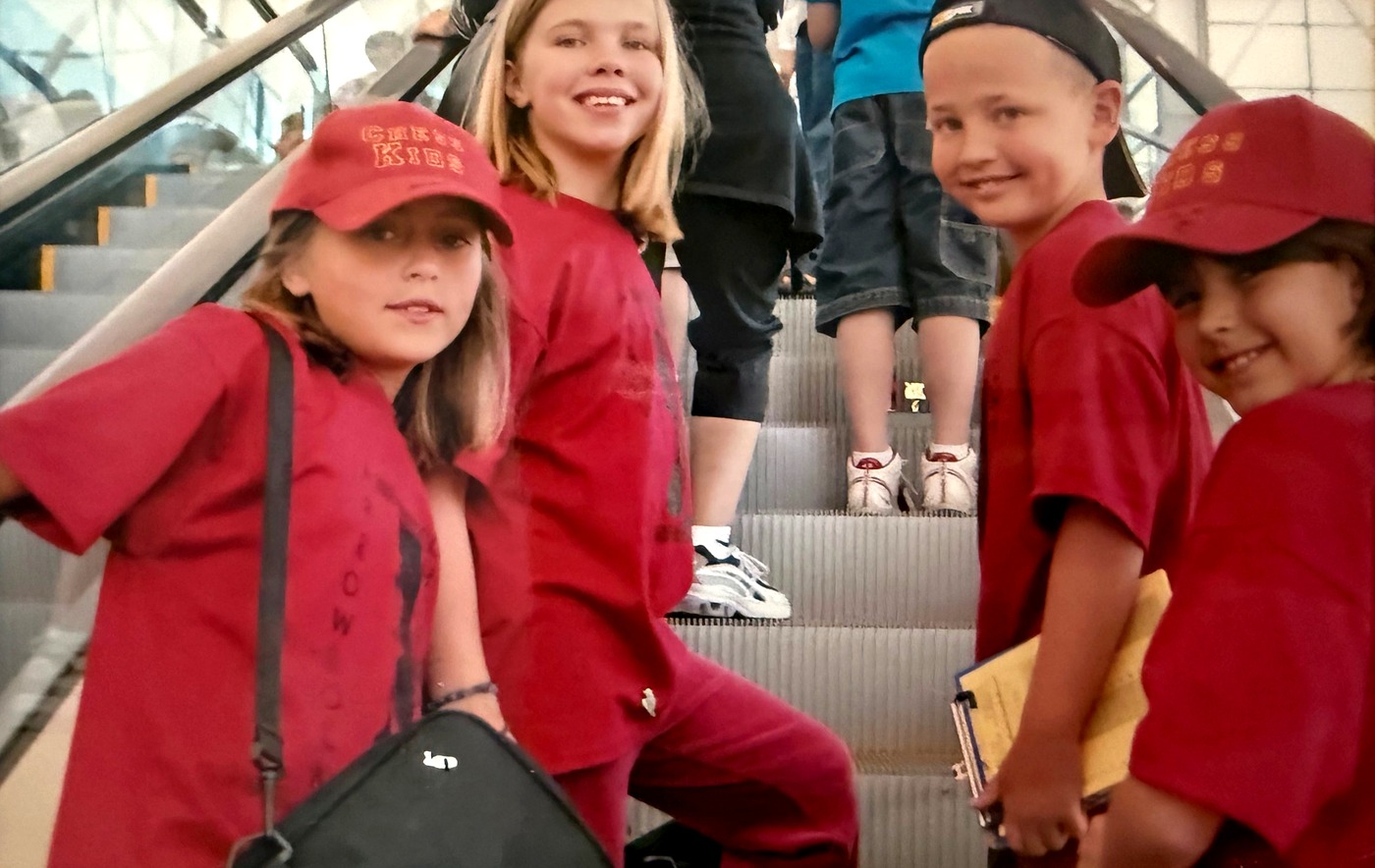
Classes, training sessions and honors camps at schools across the United States. These thirteen independent schools among them.
- St. Mark’s School of TexasDallas, TX
- Francis W. Parker SchoolChicago, IL
- The Episcopal School of DallasDallas, TX
- The Kinkaid SchoolHouston, TX
- Fort Worth Country DayFort Worth, TX
- St. Andrew’s Episcopal SchoolAustin, TX
- UCLA Lab SchoolLos Angeles, CA
- San Francisco Friends SchoolSan Francisco, CA
- Miami Country Day SchoolMiami, FL
- Sun Valley Community SchoolSun Valley, ID
- Riverstone International SchoolBoise, ID
- Foothills School of Arts and SciencesBoise, ID
- The Ambrose SchoolMeridian, ID
The record
230+
State, regional, national
& grade championship titles
Won by his students since 2004 — the number the rest of this page is really about.
His own board
- 1998World Scholar-Athlete GamesFirst place overall
- 1998All-America Cup Chess Champion
- 1999Idaho State Scholastic ChampionFirst place overall
- 2000Idaho State Scholastic ChampionFirst place overall — second consecutive year
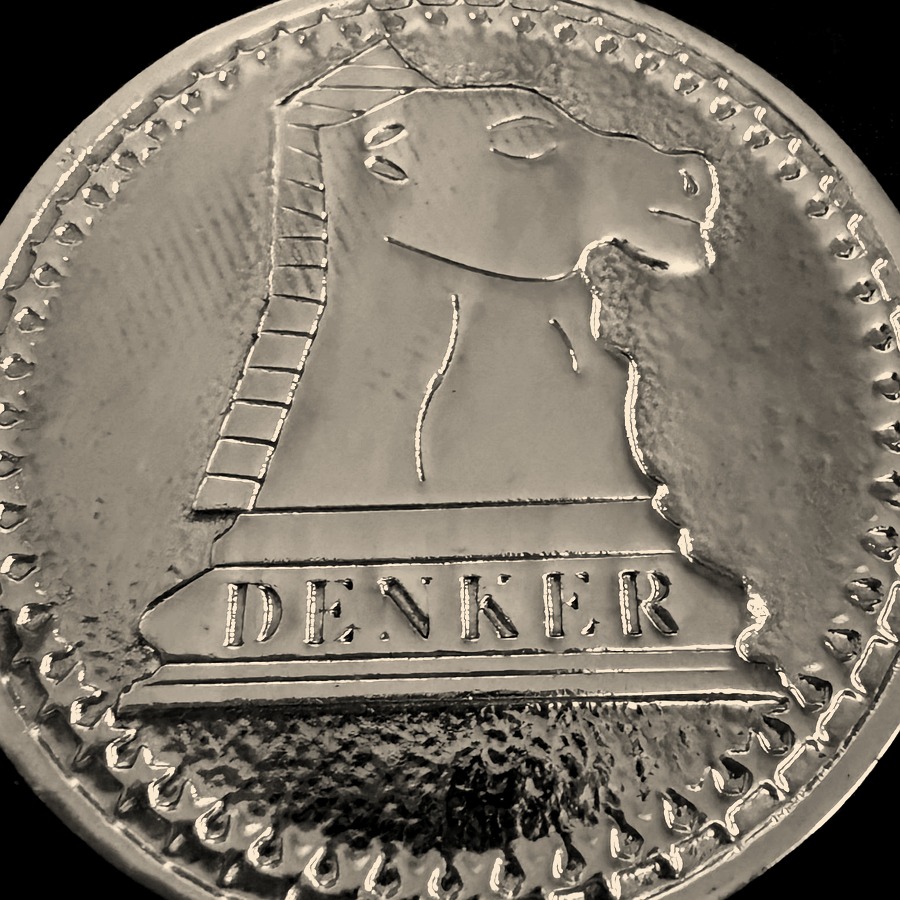
Idaho’s representative at the Denker Tournament of High School Champions. Certified Chess Professional and Tournament Director, United States Chess Federation.
A note on one student
One of them grew up
in his own house.
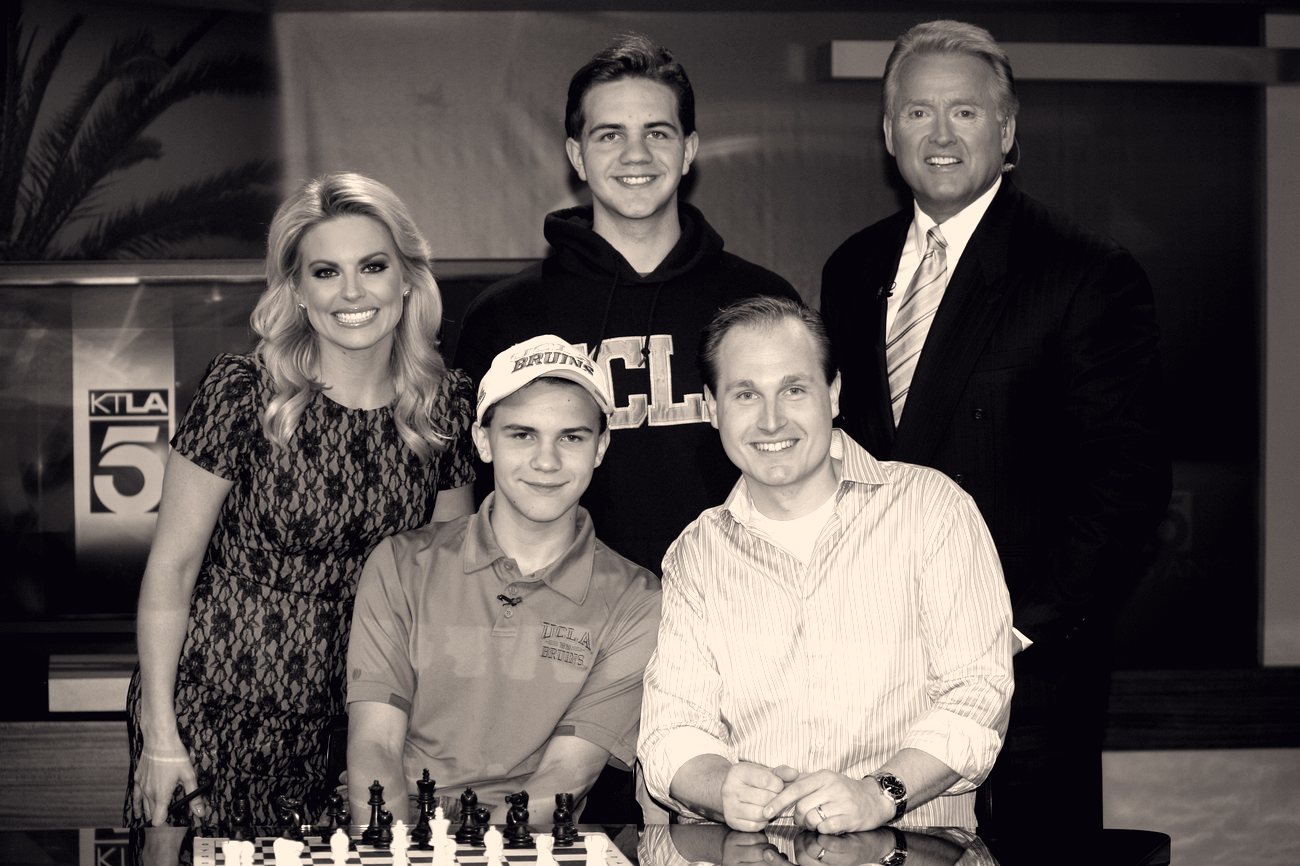
Luke’s arrival at UCLA, with Daniel and his older son Carl
International
Master
Daniel’s son, coached at home from the start.
Accepted at 14
UCLA admitted twenty students under sixteen in a decade. He was one of them.
Mathematics
& Computer Science
Two bachelor of science degrees, pure mathematics and computer science. Google at eighteen, then a Georgia Tech master’s in machine learning.
A few of the most advanced students now work with Luke himself.
▶14-year-old chess and math prodigy enrolls at UCLA UCLA · September 2013Where they go
Years at the board
Children who start at five or six often stay for years. Long enough to lose, work out why, and come back to the same position the following week.
That habit doesn’t stay at the board.
- Harvard
- Princeton
- Stanford
- UCLA
- UC Berkeley
Chess did not get them in. But the part of a child that will sit with a hard problem until it gives way was practiced every week, for years, on sixty-four squares.
How far a child takes it is the child’s own decision. Some stop when they have won the thing they set out to win. Others never stop at all.
He does not think chess should be any child’s first priority. With his own sons he made sure school came first.
Gabriel Eidelman
National Master at thirteen. Names Coach Vellotti as one of three coaches, alongside an International Master and a Grandmaster. Now at Stanford.
“He’s been tutored at the prestigious Vellotti’s Chess School.”
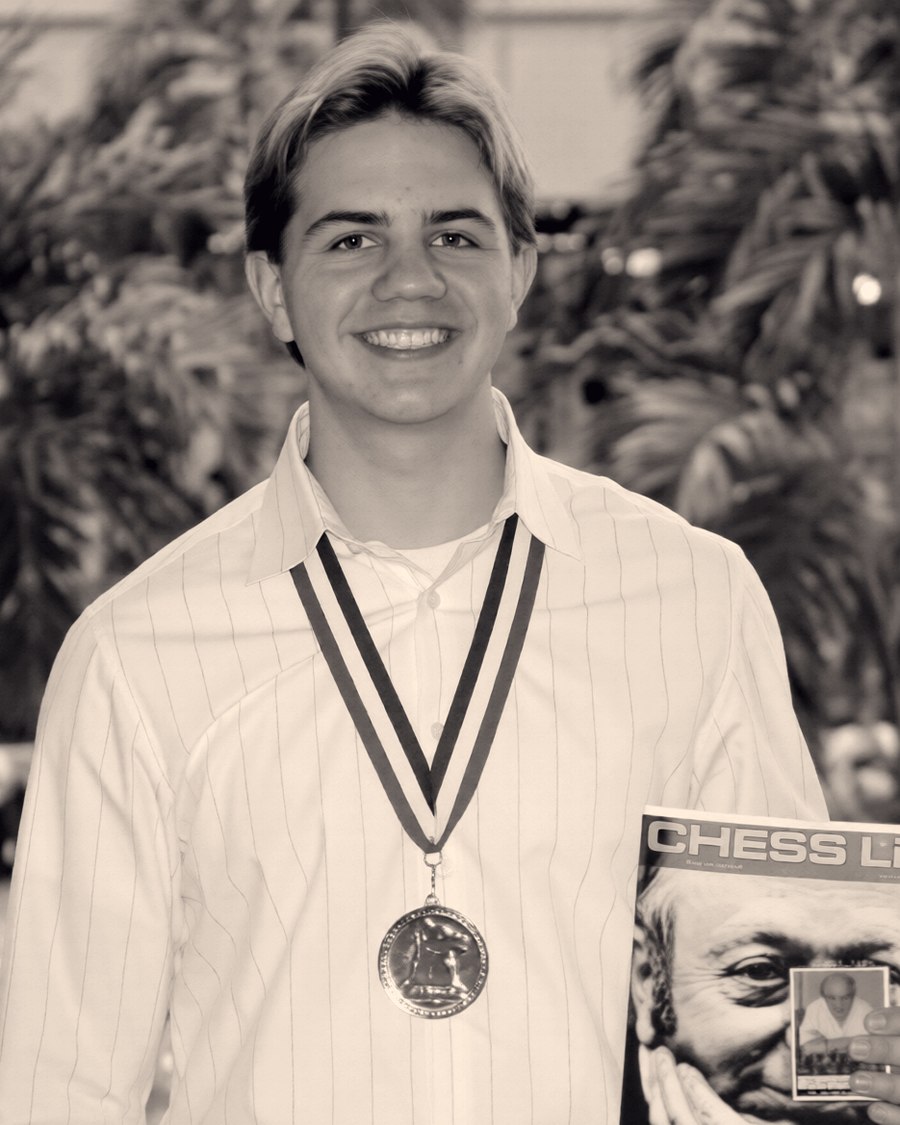
Carl Vellotti
USCF expert. A state champion invited to the Denker Tournament of High School Champions. Bioengineering at UCLA, then a master’s in engineering management at UC Berkeley.
Long afterward
They keep playing
The students who stop competing do not stop playing, or mastering the game. Years later they still write — from dorm rooms, from jobs, from their own kitchen tables — to say they are glad they found chess.
That is the part no title records.
“I still play chess! Your positivity even inspired me to want to be a coach myself, although in soccer not chess.”
The author
Seven books
An illustrated series for young readers. Available on Amazon.
- Master Disaster!
- Island Adventure!
- Spooky Checkmates!
- Tricks & Traps
- Crafty Clues!
- Cupcake Escape!
- Holiday Checkmates!
His own app
Enchanted Chess
Built for his youngest students.
Ventures
Ten trademarks
- Vellotti’s Chess School™
The teaching practice. Online lessons and camps.
- Enchanted Chess™
Chess learning app for young children.
- Future Grandmaster®
The training system behind every program.
- Little Chess Masters®
Preschool program for children aged three and up.
- Young Chess Masters®
Program for elementary school students.
- Princess Chess®
Program built to bring more girls to the board.
- Got Chess?®
Apparel line designed for students and campers.
- We Make Chess Fun!®
Every child can learn. Every move can delight. Every game can inspire.
Beyond chess
- Brick Adventures®
Block-building camps, books and video for children.
- Dragons and Legends™
Fantasy role-playing world for young readers.
How families find him
A boy was beating everyone he played. He had a coach already, and a good one. There was exactly one opponent he could not get past.
His mother finally asked that boy’s mother how he kept doing it.
“Oh — it’s because we have the most amazing coach.”
She asked for the name. Coach Vellotti was not in the room.
“I’m so impressed with how excited both my son and daughter were after their first chess lesson with you. We got out the chess board that their grandfather hand-made for the very first time, and we haven’t stopped playing since!”
Camps
Mountain towns
and coastal cities
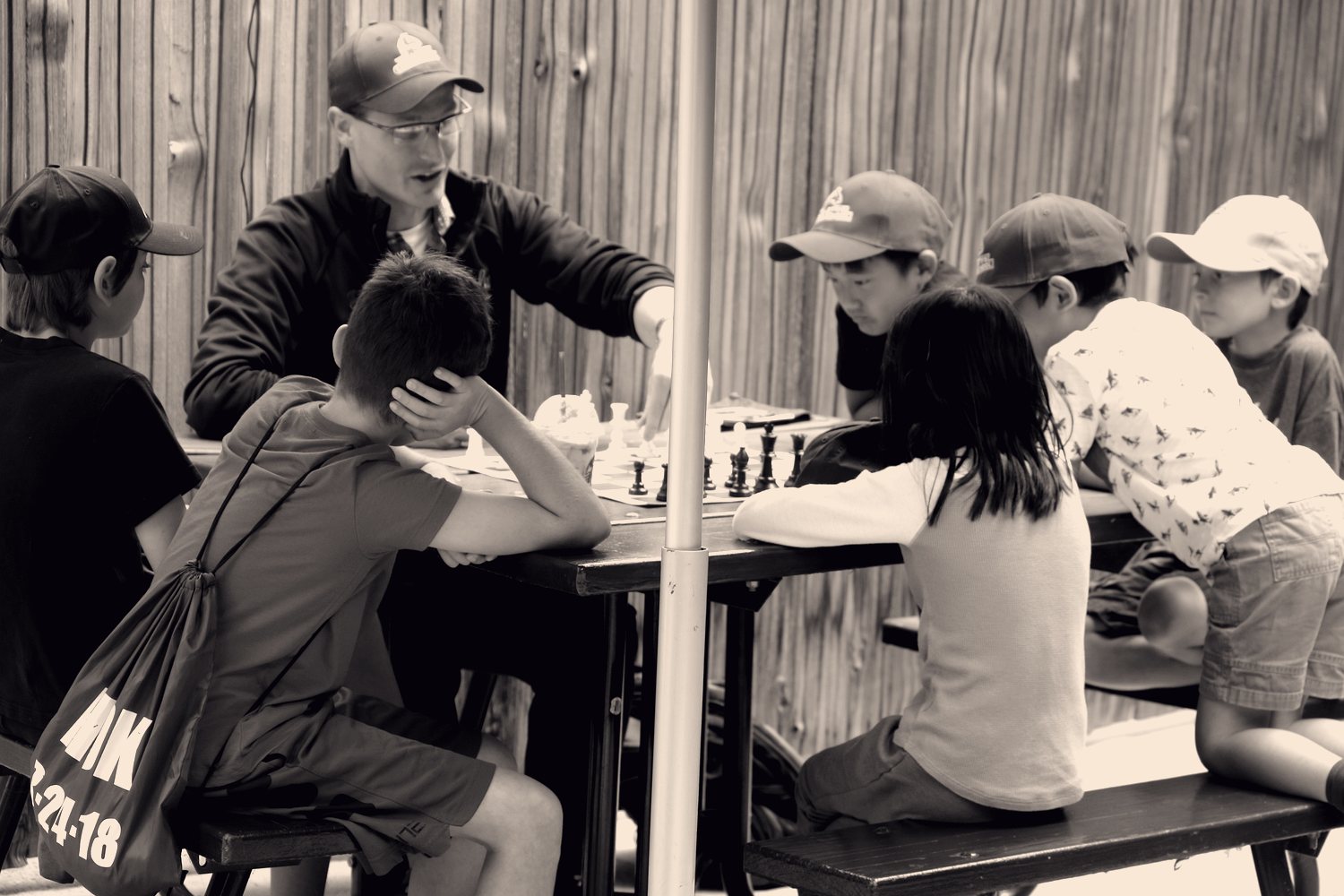
Four-day summer chess camps for children, Monday through Thursday, held in person each year.
- Sun ValleyIdaho
- Jackson HoleWyoming
- San FranciscoCalifornia
- Los AngelesCalifornia
- New York CityNew · Summer 2027New York
Workshops in San Francisco and Los Angeles, roughly every two months — and while he’s there, he sits down in person with any child who needs to be seen off a screen.
Nickelodeon Parents’ Pick Winner Voted #1 Best Camp
How it works
Online, weekly
Lessons run on Zoom with screenshare, so a child moves the pieces from their own end rather than watching someone else move them.
New students are taken up to about twelve, and children who start young usually stay through fifteen or sixteen. A four-year-old can hold an hour.
He also has a few adult students: parents trying to keep up.
Every student has a dedicated weekly slot. Improvement comes from commitment, so he doesn’t take casual or week-by-week students.
Education Director
Ask me anything
Parents call Ava Vellotti about chess and stay on the phone about school.
She advises families on decisions that have nothing to do with the board — where a child should go, what to ask a school, when to push and when to wait. She got into Stuyvesant High School in New York by exam at thirteen, and went on to Georgetown.
She writes letters of recommendation for admissions.
And she keeps time open for parents who simply want to talk. Fifteen minutes or thirty, free, no obligation, on any subject at all. She calls you.
She also writes. Once a month, a letter about children, presence, and joy — the first one is The Beanie Baby Fairy.
Families arrive for chess lessons. Many of them stay for this.
Pick a time